



Croatia Off the Beaten Track. The Kornati archipelago, the Kvarner Gulf and Istria
September 30, 2026
By Jack Jennings, Charter Consultant
When clients start planning a charter in Croatia, the itinerary conversation usually begins with the same three names: Split, Hvar, Dubrovnik. Good places, all of them, and busy for a reason. But more of the guests who've already done that route are now asking a different question: what's further north?
The honest answer is a lot. It's worth considering even if you've never sailed the Dalmatian islands, as a quieter alternative, for two reasons:
Remote anchorages: Some of Croatia's quietest bays, often with no other boats in them, and small villages scattered across otherwise wild islands.
Nature over nightlife: Many stops on the northern route are known for scenery and wildlife rather than the busy harbour towns of the Dalmatian islands.
I've sailed here many times, and between my own trips and a few captains I know well, I've picked up some insights that can make a trip here special. Here are some of them, starting in Šibenik and heading north.
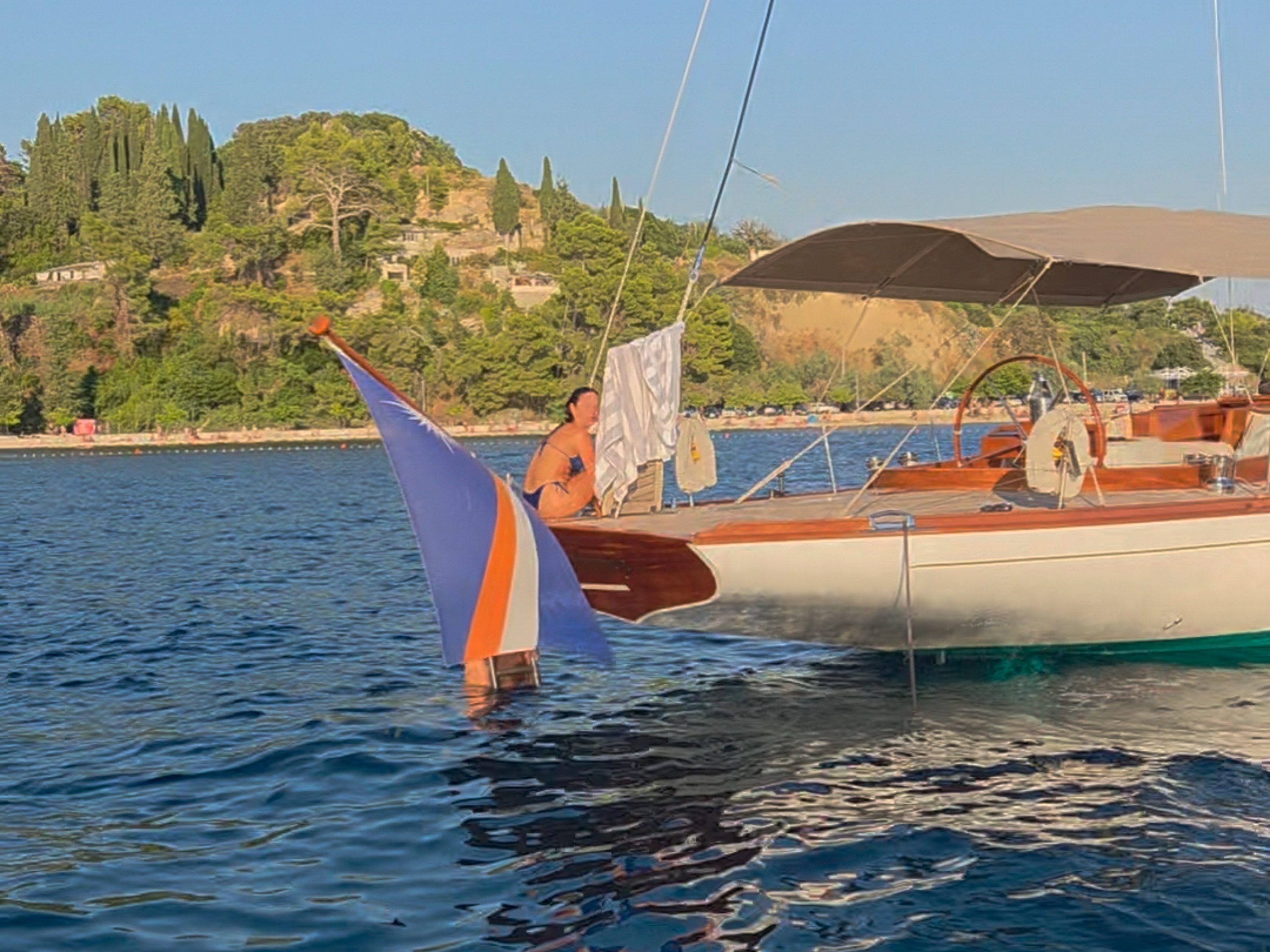
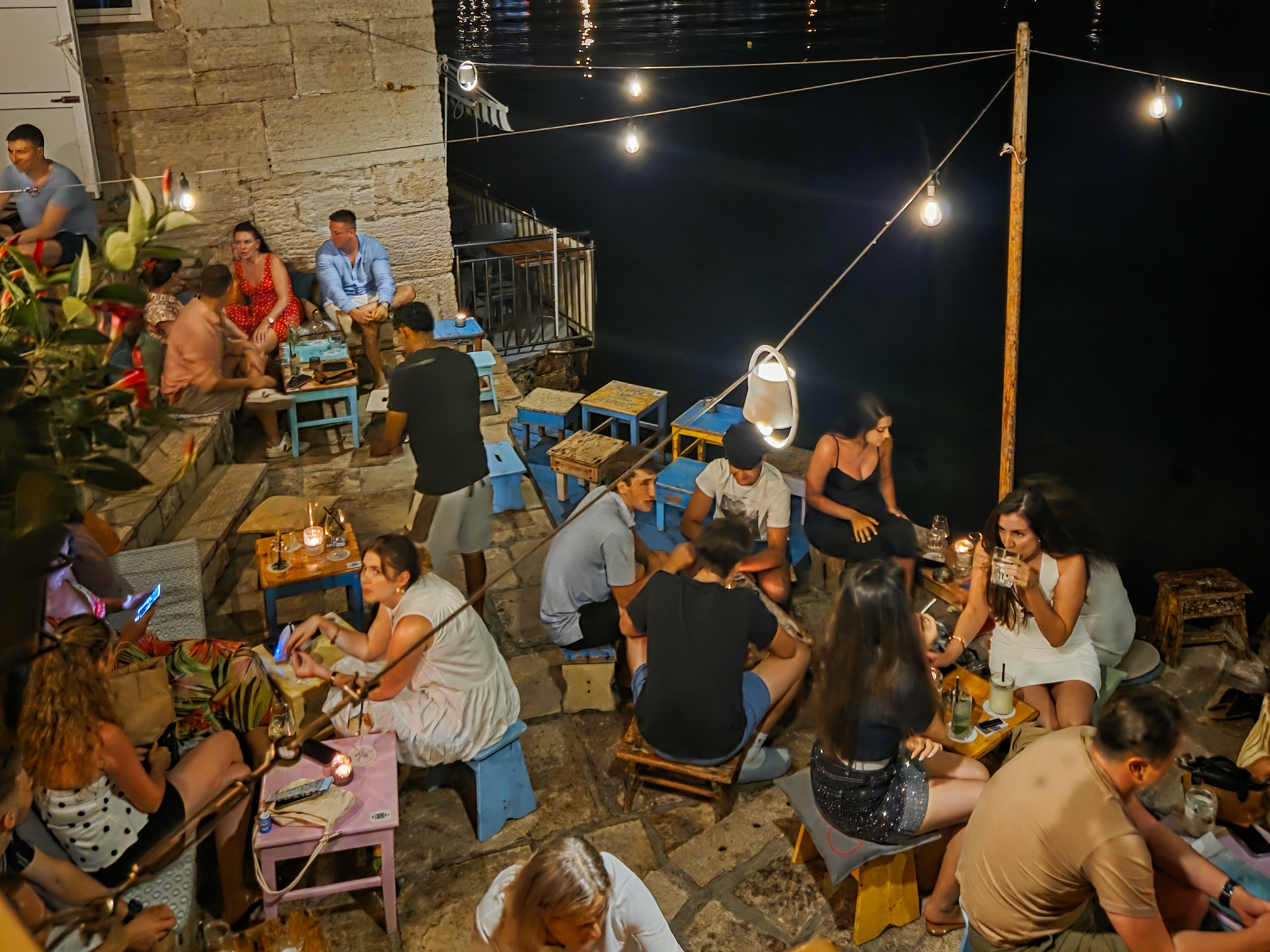
Croatia's Northern Coast, Through Jack's Lens
Šibenik and the Krka
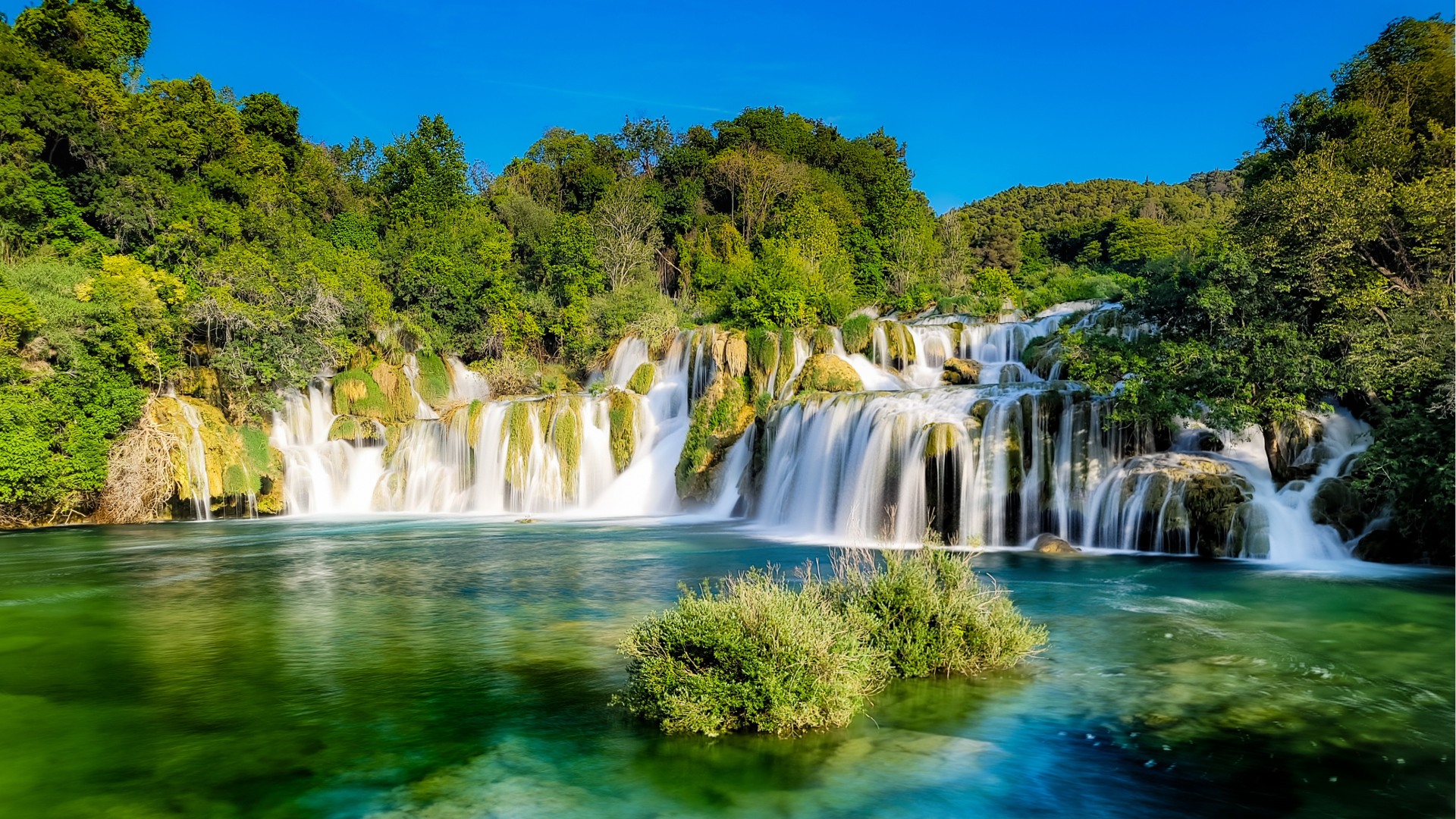
Many Kornati archipelago charters start or end in Šibenik, and it earns the stop on its own merits: a walled old town with two UNESCO World Heritage sites, the Cathedral of St James and St Nicholas Fortress, within a five-minute tender ride of the marina. But the real reason to build a day around it sits upriver, at Skradin and the Krka waterfalls above it.
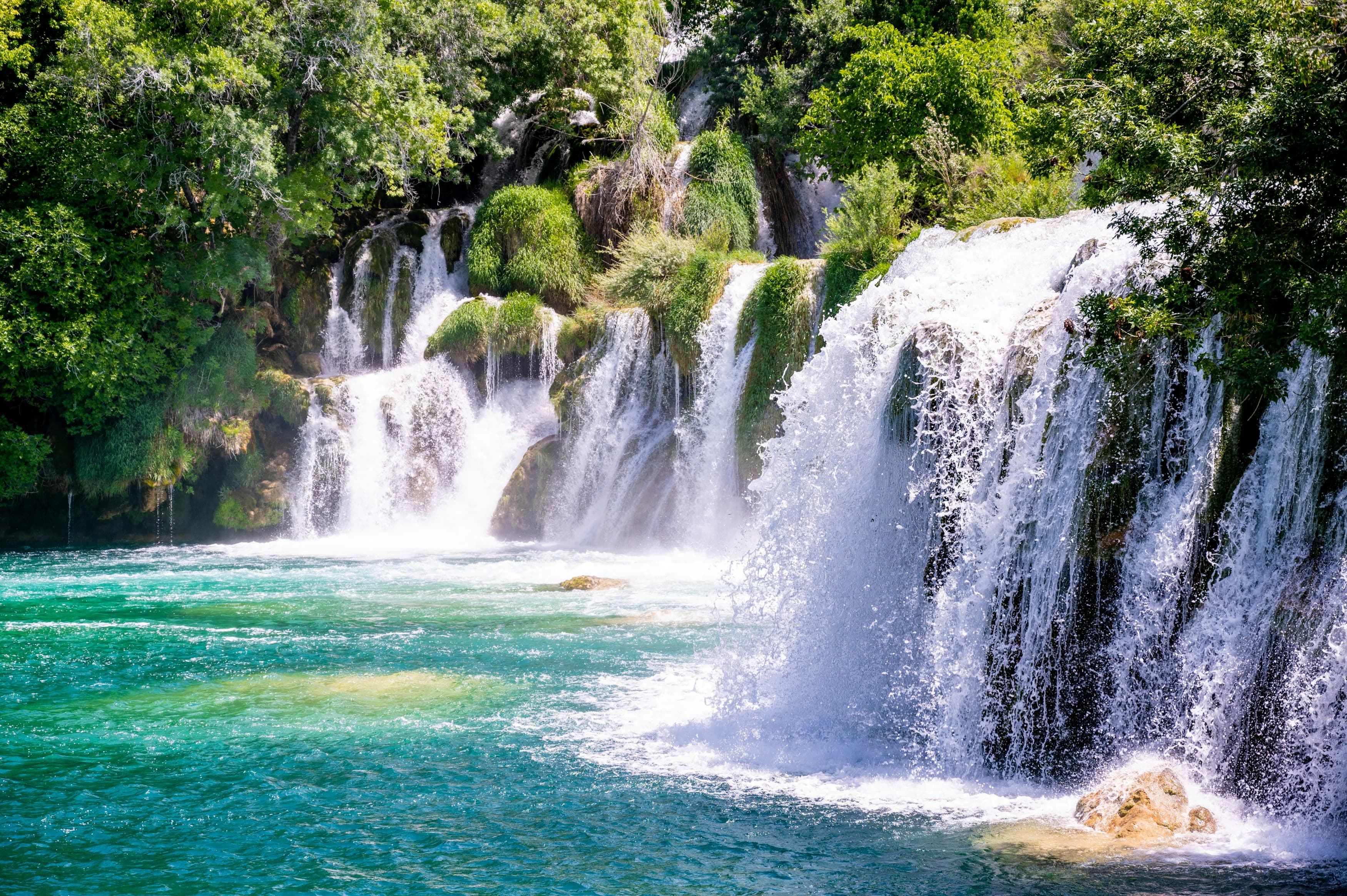
Skradin sits where the Krka river opens into Lake Prukljan, about fifteen kilometres from Šibenik. From here, a short walk or cycle takes you into the national park and up to Skradinski buk, the largest and best known of the falls.
Skradin itself is a lovely little village, straight out of a storybook, and worth an overnight stop. A short transfer over the hills takes you to Plastovo and the BIBICh winery, known for its twelve-hour risotto and wine pairings that the late Anthony Bourdain called a 'death-row' meal. An endorsement doesn't get much better than that.
Back out through the Krka estuary into open water, it's a short hop to Zlarin, a car-free island with a coral-diving tradition that goes back centuries.
The Kornati Islands
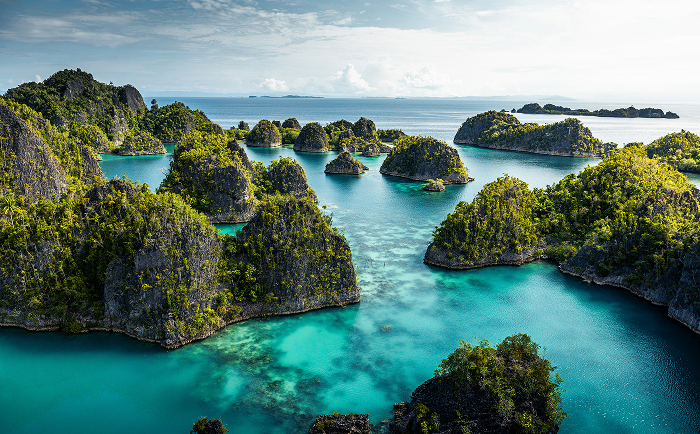
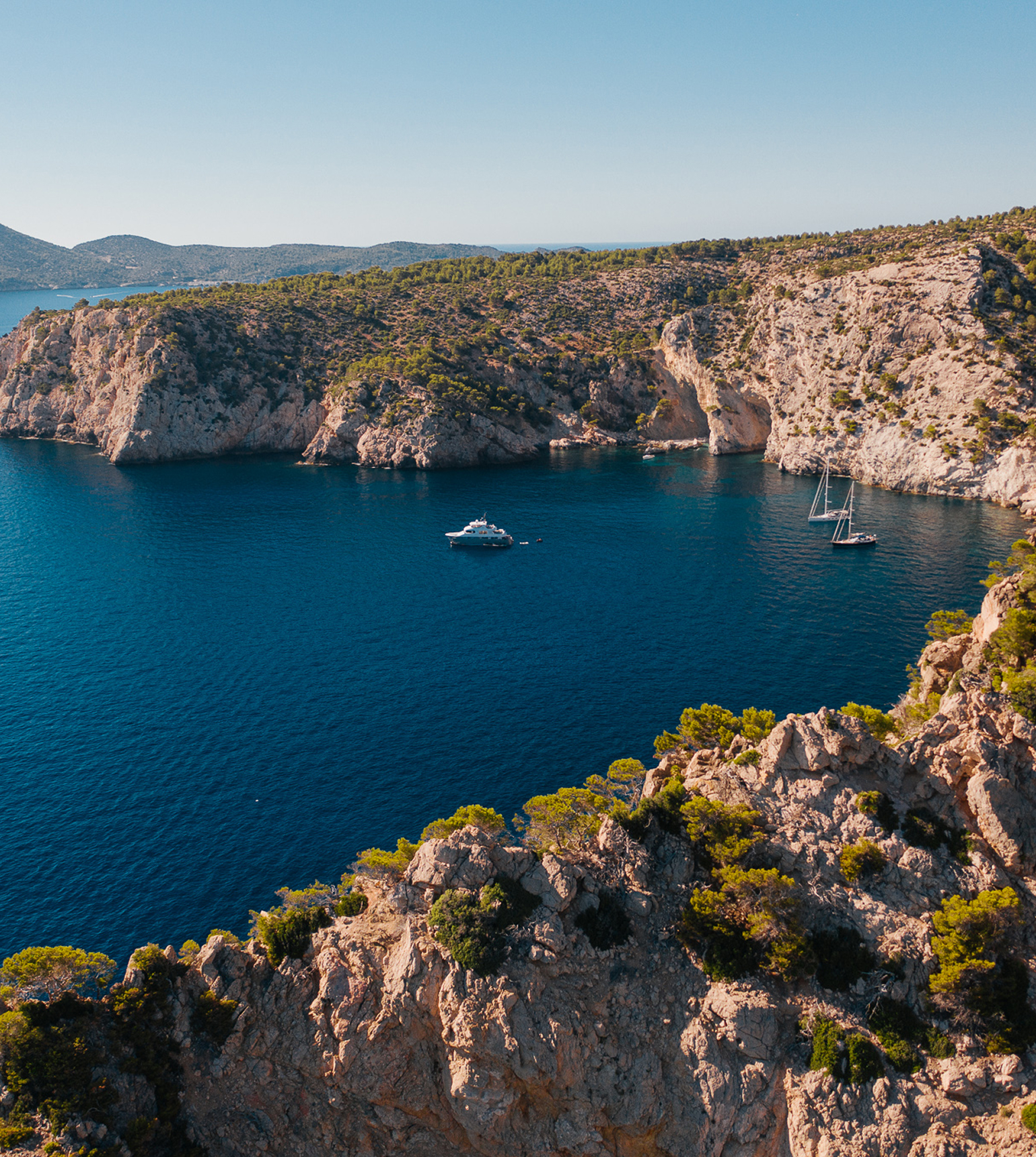
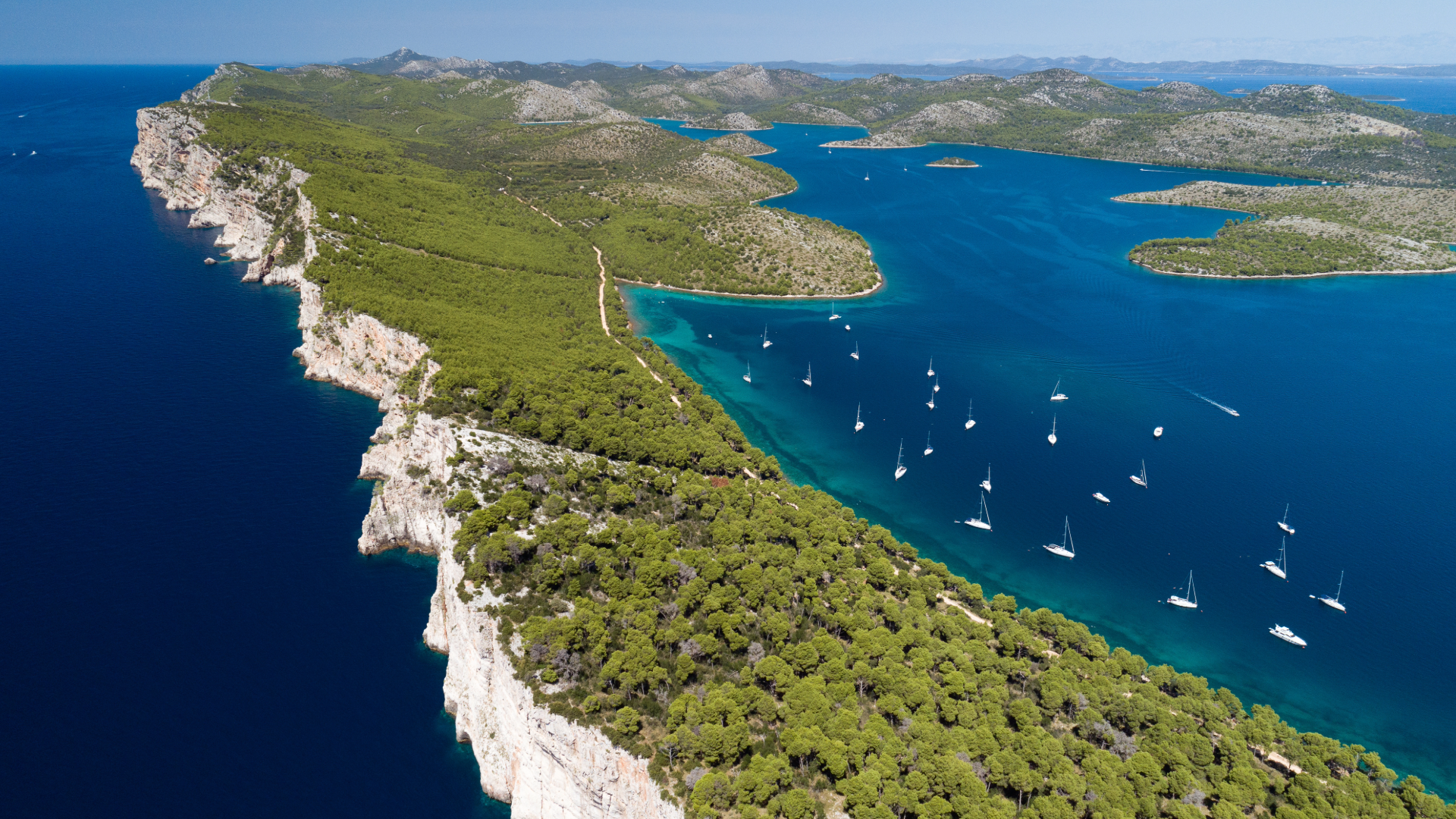
Kornati National Park comprises 89 islands, islets and reefs, and what photographs never quite capture is the silence. Past a certain point there are no ferries and no permanent settlements, nothing but limestone, scrub and water. Around ninety per cent of the islands are still owned by families from neighbouring Murter. They built the dry stone walls that stripe the hillsides, over 260 kilometres of them on Kornat alone, to keep sheep from wandering onto a neighbour's land. The park's cliffs, known locally as 'crowns', reach 82 metres above the water on Klobučar and drop as far as 90 metres below it off Piškera.
Dugi Otok, the long island that closes off the archipelago to the west, is where I'd send anyone who wants a proper beach rather than just a bay. Sakarun is sand, properly sand, which is rare enough on this coast to be worth saying twice. It's an 800-metre beach that shelves gently enough for children and is sheltered from the bura and the tramontana. Cruising north along Dugi Otok's outer coast is an experience in itself, with towering cliffs as the backdrop to a lazy afternoon. Round the headland at Veli Rat and you're into a sheltered lagoon for a quiet night at anchor.
Further north lies Olib, a well-kept secret that feels properly remote. A visit here is a step back in time, in the best sense. It makes a fitting close to this leg of the trip, and several swimming stops between Veli Rat and Olib offer the clearest snorkelling on the route. With almost no light pollution, and waters that stay quiet even in August, it's also the place to watch the Perseid meteor shower from the deck, anchored in a private bay.
The exception to the rule
This stretch of coast is about quiet, with one notable exception. Tisno, across the channel from Murter, has spent the last fifteen years or so, becoming one of Europe's more serious electronic music destinations. The scene is built around a former military holiday camp, now The Garden Resort, and the open-air club Barbarella's next door. The line-up changes every year (this season ran from Hospitality on the Beach and Love International in July through to Dimensions & Dekmantel Selectors in August), but the setting and the crowd stay the same. Further north, Pag does something similar on a bigger scale: Zrće beach, three clubs deep, earned it the nickname 'Croatia's Ibiza'.
None of that is what this route is about. But for a group who want one or two lively nights set among a week of quiet ones, it's worth knowing it's there.
The Kvarner Gulf
North of here the coast changes character again: greener, cooler and considerably quieter than Dalmatia, even at the height of summer. It remains underused by charter, which is most of its appeal.
Mali Lošinj was declared an official Austro-Hungarian climatic health resort in 1892 and was visited twice by Archduke Franz Ferdinand. Doctors once prescribed its mild winters for respiratory illness, the way a doctor today might prescribe a course of treatment. The modern version of that same air and water is the Lošinj Dolphin Reserve. At 526 square kilometres, it is the largest protected marine area in the Adriatic and the first in the Mediterranean set up to protect a single dolphin population. Around 200 bottlenose dolphins live in these waters.
Further into the gulf, Cres is worth a stop for wildlife lovers. Its cliffs hold one of Croatia's last breeding colonies of griffon vultures, with wingspans of up to 2.8 metres. The rescue centre at Beli takes in the fledglings that fall into the sea on their first attempts at flight each summer.
Next comes Krk, linked to the mainland by bridge since 1980 and home to Rijeka's airport, which makes it a useful logistical bookend. It's also worth the run up to Vrbnik on the east coast, a town perched fifty metres above the sea on a limestone cliff. It's known for Žlahtina, an indigenous white grape grown almost nowhere else. For enthusiasts, private tastings with food pairings can be arranged at Vinotel Gospoja. These include their signature Valomet, a sparkling Žlahtina aged for years on the seabed, 30 metres down at the foot of the cliffs. For something more hands-on, the family-run Ivan Katunar estate hosts private masterclasses on its covered terrace overlooking Vrbnik. These can include micro-lot wines fermented the ancient way, in large clay amphorae.
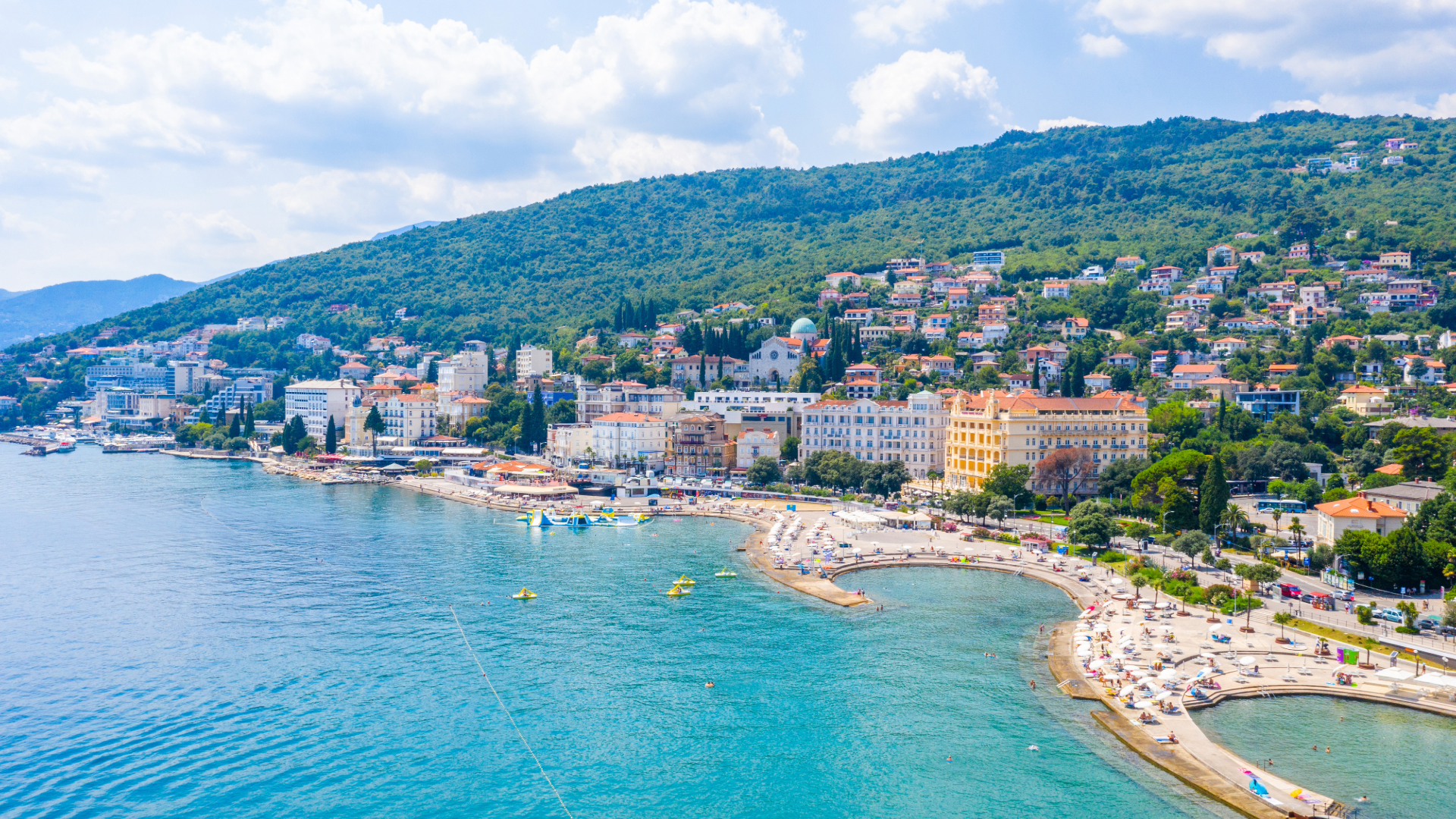
Opatija is where I'd send a history-minded guest. Heinrich von Littrow founded the Adriatic's first sailing club here in 1887, the Union Yacht Club Quarnero. Two years later the town was declared Austria's first official seaside resort, and the same clientele who built Nice and Baden-Baden lined what is now a twelve-kilometre promenade with their villas. It can feel a little anachronistic next to the rest of the region, but that's the point. In an itinerary otherwise built around anchorages, the restaurants here make the case for an evening ashore: Plavi Podrum in neighbouring Volosko, or the Michelin-starred Nebo, a short drive away on the Rijeka side.
Istria
Rounding into Istria, Pula is worth a run ashore for the Arena. It's one of only six Roman amphitheatres of its size still standing, and the only one with all four side towers intact. But the real reason to stop is just offshore.
Brijuni was Tito's private retreat for three decades. The safari park he built for animals given to him by foreign leaders is still there: zebras, llamas, and an elephant named Lanka, a gift from Indira Gandhi in 1972. They graze a short walk from dinosaur footprints laid down some 100 million years earlier. There's also a 1,600-year-old olive tree on the island that still produces oil. It sounds like an odd combination on paper. It is an odd combination, and worth a stop for that reason alone, particularly with children on board.
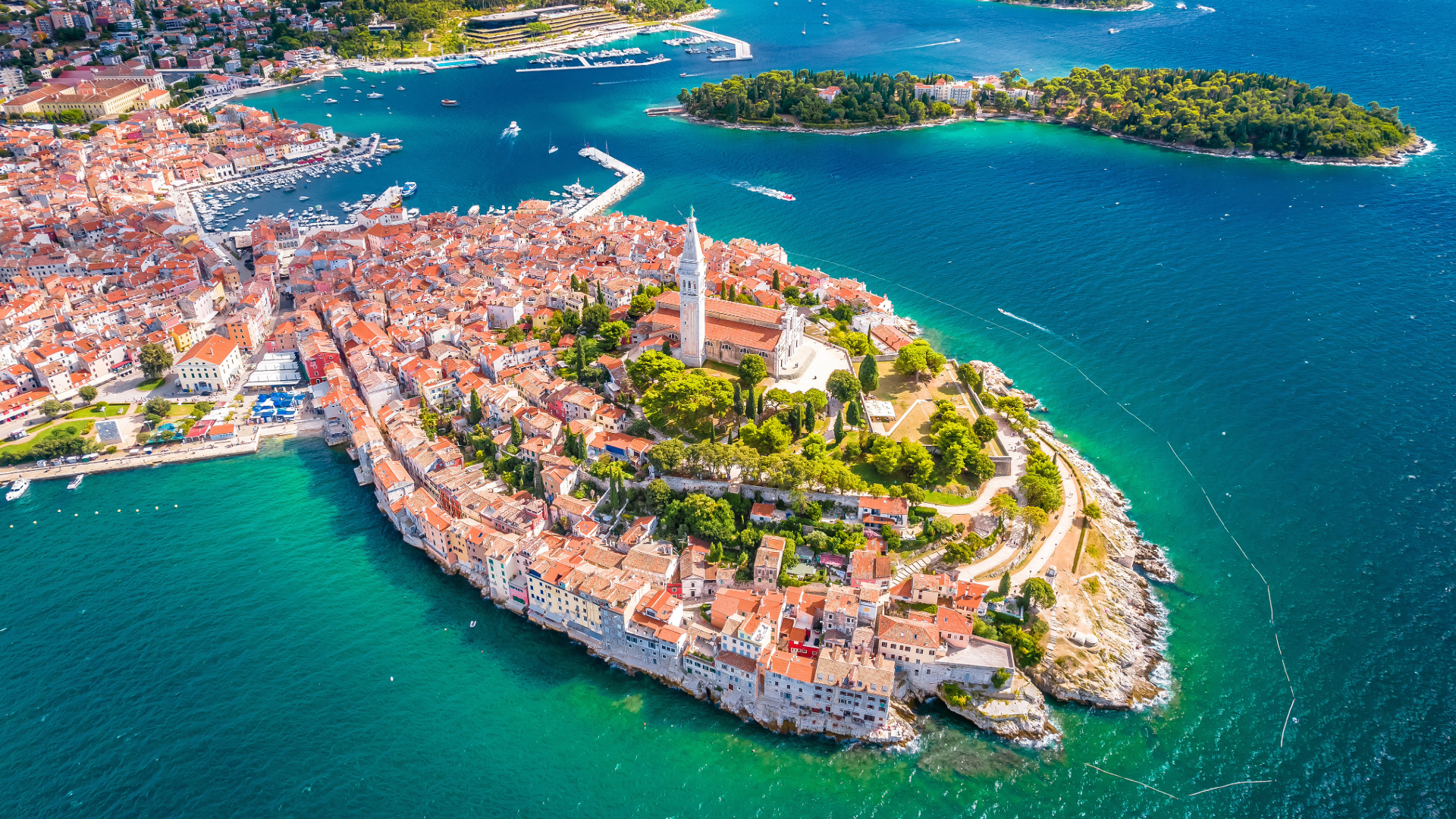
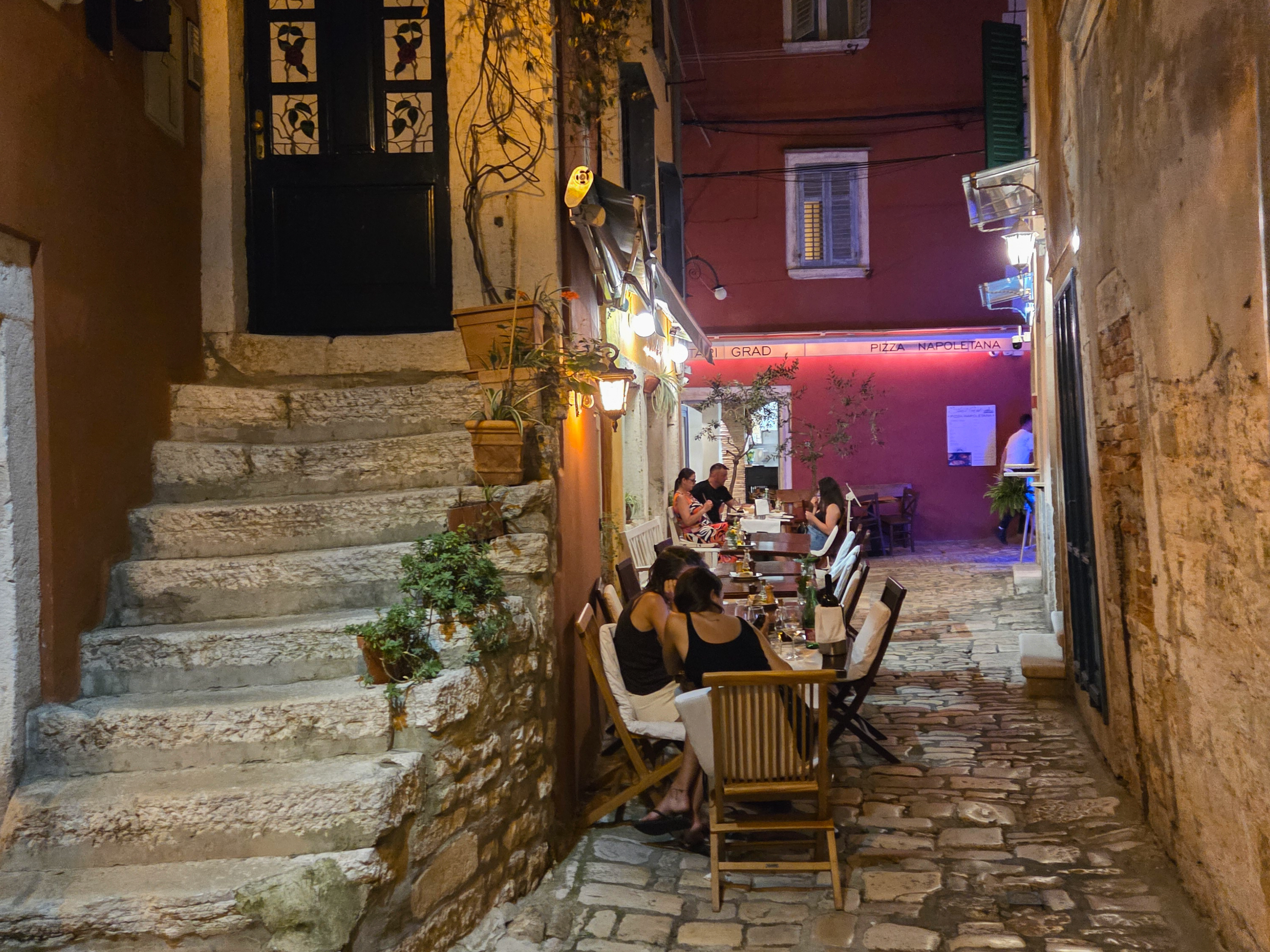
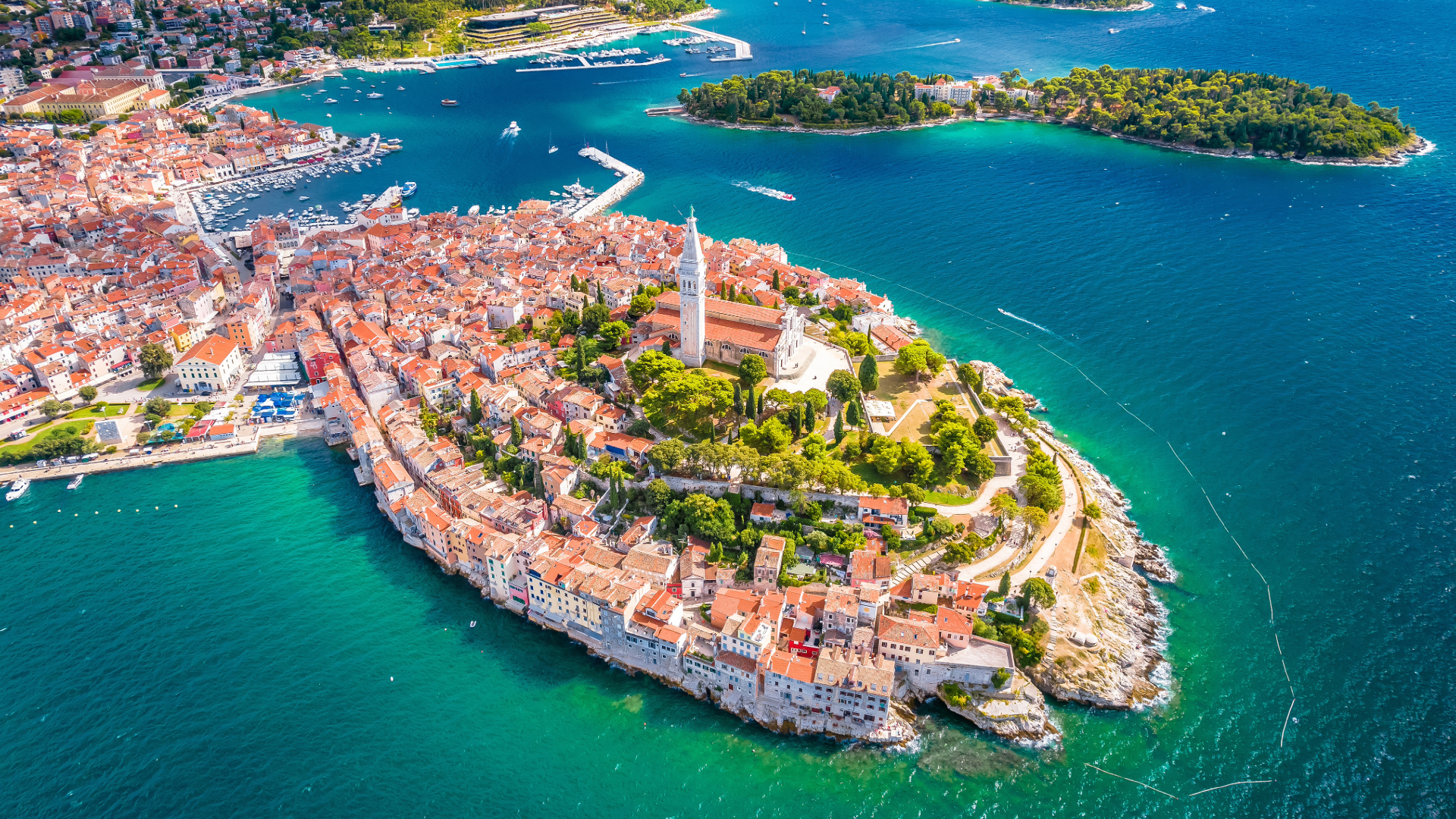
Which brings me to one of my favourite towns in Croatia: Rovinj. It was an island itself until the channel separating it from the mainland was filled in, in 1763, and it still reads like one. A knot of Venetian streets climbs to the Church of St Euphemia, whose 61-metre bell tower, the tallest in Istria, was modelled on the campanile of St Mark's in Venice. The saint's sarcophagus is said to have arrived by sea from Constantinople around 800 AD. Some of the prettiest cobbled lanes in the Adriatic are here.
Just north of Rovinj is Novigrad, the northernmost stop on this route. It's another old town, quieter than Rovinj, built on the site of Roman Neapolis. The marina takes yachts up to 50 metres, and the town has more good seafood per square metre than anywhere else on this list. At Damir & Ornella, which has just six tables, fish is cut and served at the table in a style the owners call Mediterranean sashimi.
Where does all this leave you?
None of this replaces the Dalmatian coast, and it isn't trying to. It's a different charter entirely: quieter anchorages, uninhabited islands, and a coastline that rewards not only guests who've already done the popular route, but anyone who enjoys a slower pace. As you'll have gathered, it covers a lot of ground. Šibenik to Novigrad is more than a single week can do justice too, so most guests choose one or two regions or plan a fortnight, and careful routing makes all the difference. I'd be glad to help anyone keen to explore it.
If any of this fits a charter you're planning, or you'd like a route built properly around it, get in touch at jennings@swisspath-yachting.com.
Explore More
Discover more stories, insights and voyages from the Swisspath TAG Yachting world.
View All Stories →