



The Solar Eclipse
May 25, 2026
Why the Balearic Islands offer the ultimate viewing position
Total Solar Eclipse 2026: Why the Balearic Islands Offer the Ultimate Viewing Position
12 August 2026 marks a rare astronomical convergence across the Mediterranean, and the case for experiencing it from open water.
On 12 August 2026, the Balearic Islands will experience a total solar eclipse, the first visible from Spanish territory since 1905 and the last until 2053. Totality begins between 20:25 and 20:28 depending on location, lasting approximately one and a half minutes as the sun hovers just 2.5 degrees above the western horizon, a positioning that defines both the eclipse's rarity and its viewing requirements.
This creates what astronomers call a "sunset eclipse", a phenomenon typically occurring over open ocean rather than from accessible land-based locations. The challenge is straightforward, at such a low angle, any obstruction between observer and horizon blocks the critical final moments. The Balearics solve this equation naturally. All four islands, Mallorca, Menorca, Ibiza, and Formentera fall within the narrow 150-200km corridor of totality, and their western coastlines open directly onto uninterrupted sea views.
With fewer than three months remaining until the eclipse, land-based viewing positions across the islands are heavily booked. Charter offers not only availability but a fundamental viewing advantage that fixed locations cannot match.
Understanding the 2026 Eclipse Path
The eclipse's path of totality sweeps across the Arctic, Greenland, Iceland, and northern Spain before crossing the Balearic archipelago and continuing into the Mediterranean. While Iceland experiences slightly longer totality duration, the Balearics offer substantially better weather prospects, meteorological data shows a 75% probability of clear skies in August, compared to Iceland's more variable conditions.
The timing is crucial. Unlike eclipses that occur with the sun high in the sky, the 2026 event reaches totality at sunset. The sun will be positioned barely three degrees above the western horizon, creating a visual spectacle that combines astronomical darkness with the atmospheric effects of twilight. For observers, this low angle presents both opportunity and challenge.
Why the Balearics Are Exceptional
Complete Totality Coverage
The entire Balearic archipelago falls within the path of totality. Mallorca lies near the centerline, maximising duration, while Menorca, Ibiza, and Formentera all experience complete coverage. Many locations along the eclipse route experience only partial phases—the Balearics offer the full event.
Weather Reliability
Coastal areas benefit from stable Mediterranean weather patterns with minimal afternoon convection, unlike inland regions of Spain where storms can develop. Historical satellite data confirms the Balearic coast as one of the most reliable viewing locations along the entire eclipse path.
Unobstructed Horizons
Island geography provides natural advantages. Western coastlines face open sea with no terrain obstructions. At an eclipse angle of 2.5 degrees, even modest hills or buildings can block the view, the Balearics' coastal topography eliminates this variable entirely.
Accessibility
Unlike remote eclipse locations in Greenland or Siberia, the Balearics offer excellent infrastructure, numerous flight connections from across Europe, and established tourism services. The islands combine astronomical positioning with practical accessibility.
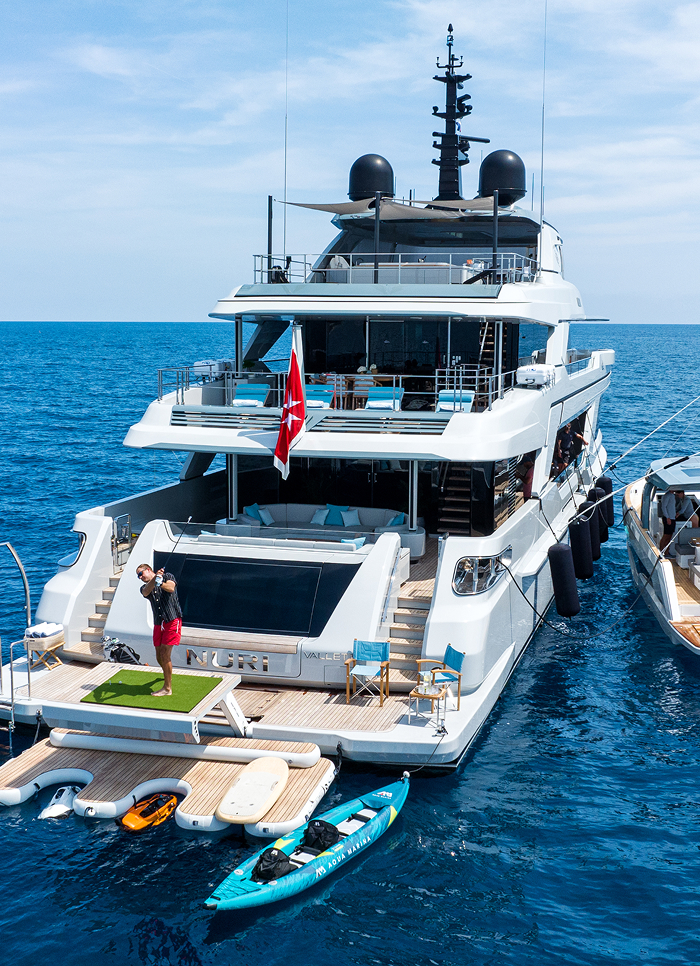
Why Charter a Yacht for the Sunset Solar Eclipse
From offshore anchorages around Mallorca, Ibiza, Menorca, and Formentera, the western horizon extends unobstructed to the curve of the earth. There are no sight lines to negotiate, no elevated positions to secure months in advance, no crowds to navigate. The advantages are both practical and experiential.
Horizon Access
A sunset eclipse demands an unobstructed western view. Buildings, coastal hills, even beachfront development can block those critical final moments when the sun is barely above the horizon. From water, the view is completely open. Your only obstruction is the earth's natural curvature.
Positioning Flexibility
Weather forecasts sharpen significantly in the 72 hours before an eclipse. Land-based observers are locked into accommodation booked months prior, regardless of developing conditions. A yacht can reposition based on actual forecast data, moving to clearer areas if localised weather threatens. This flexibility is unavailable to fixed locations.
Crew Expertise
Professional crews understand optimal anchorage selection, local weather patterns, and the precise timing variations between islands. They position the yacht for viewing comfort, manage solar observation equipment and safety protocols, and adjust plans based on sea state and atmospheric conditions. The technical aspects are handled; guests focus on the experience itself.
Privacy and Comfort
Eclipse tourism will bring significant crowds to accessible coastal viewpoints across the islands. Charter provides a private viewing experience with professional service, comfortable facilities, and the ability to enjoy the event without competing for position or managing logistics.
Optimal Positioning and Timing
The eclipse begins its partial phase around 19:38, with totality arriving in stages across the islands: Menorca at 20:25, northern and central Mallorca at 20:26, southern Mallorca at 20:27, Ibiza and Formentera at 20:28. Sunset follows shortly after at 20:50, with the partial phase concluding just before the sun drops below the horizon.
Mallorca
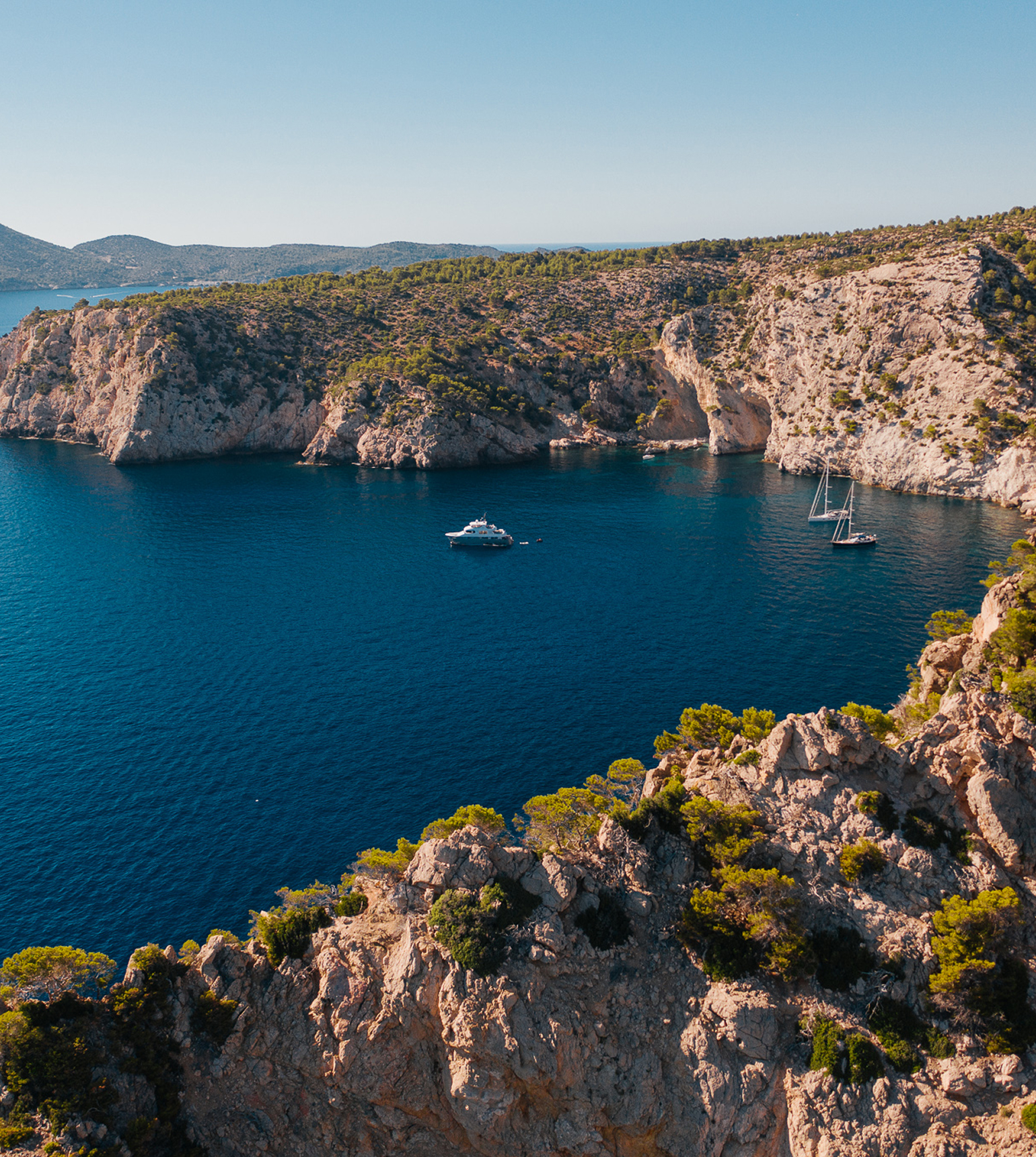
Western anchorages near Sa Dragonera provide unobstructed ocean views with the Tramuntana mountains as backdrop. The coast between Andratx and Sóller offers multiple positioning options, with deeper water allowing closer approaches to shore for dramatic topographical framing. West of Palma, anchorages combine accessibility with clear western horizons.
Ibiza
Sant Antoni Bay opens directly west, offering sheltered positioning with complete horizon access. Areas around Es Vedrà on the western coast provide more dramatic settings, though exposed to Atlantic swell. Northern anchorages near Punta Galera combine protection with optimal viewing angles.
Menorca
The west coast around Ciutadella and south toward Cala Galdana provides excellent positioning. These anchorages are less frequented than Mallorca's, offering quieter surroundings while maintaining optimal western exposure.
Formentera
Sheltered waters west of the island between Formentera and Ibiza provide protected anchorage with clear horizons. The shallow, turquoise waters here create distinctive foreground against the darkening sky during totality.
Your captain selects anchorage based on forecast conditions, preferred viewing angle, and guest requirements, balancing optimal astronomical positioning with comfort and sea state considerations.
What to Expect During Totality
As the moon's shadow approaches, ambient light drops noticeably. Temperatures may decrease by several degrees. The quality of light changes before totality—colours become muted, shadows sharpen. In the final seconds before totality, "shadow bands" may ripple across light-coloured surfaces on deck.
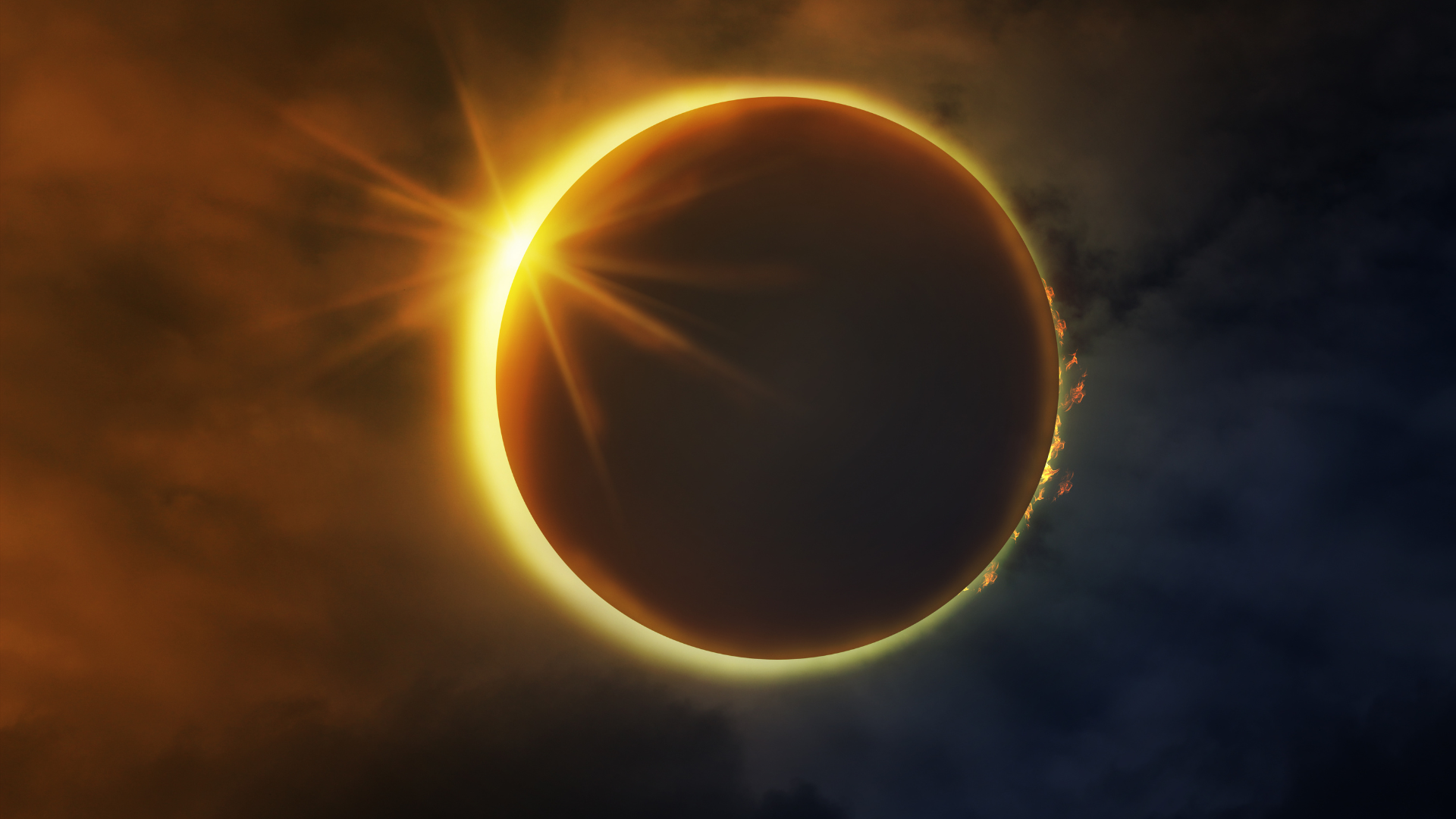
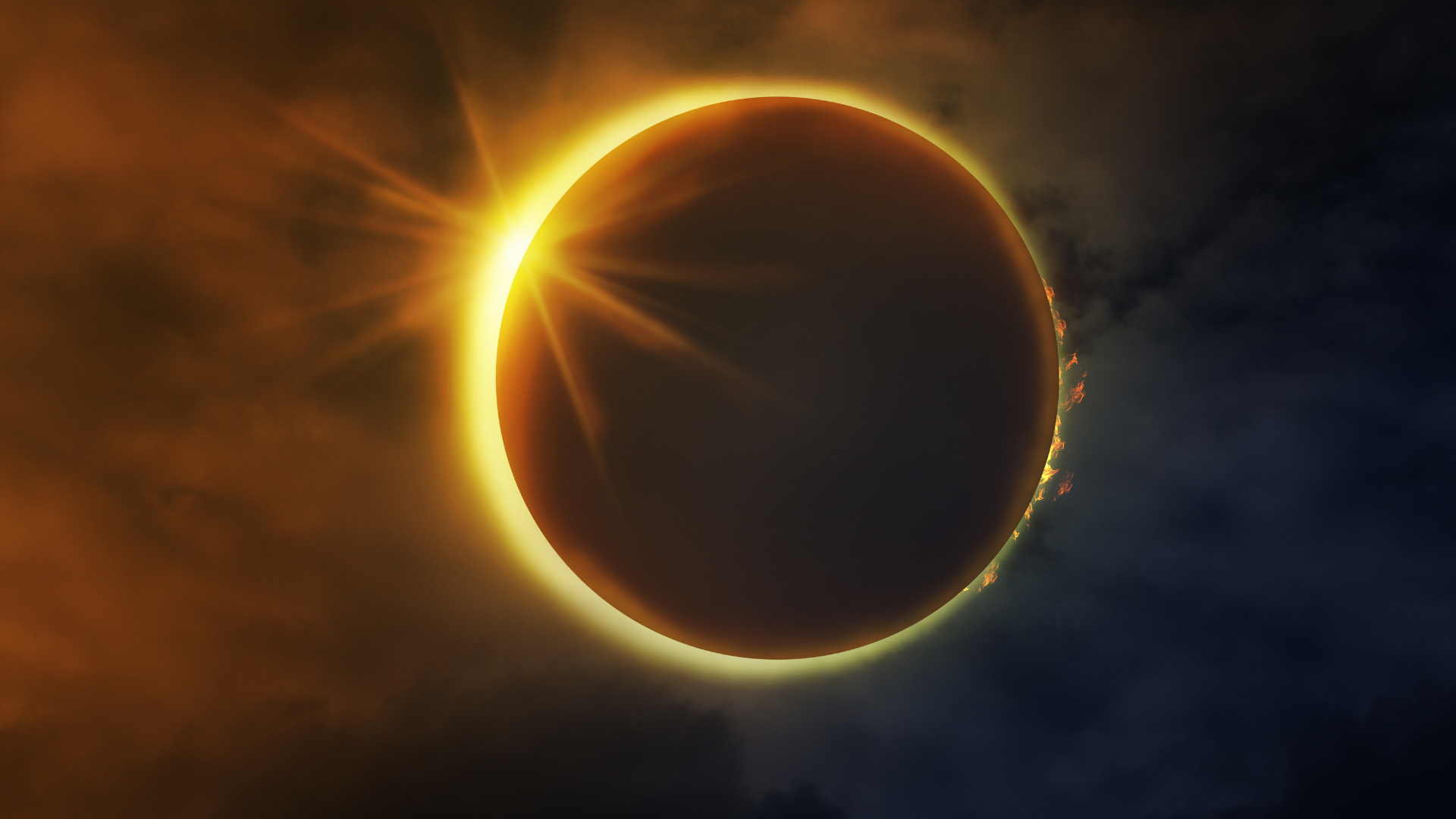
At totality, darkness arrives suddenly. The sun's corona becomes visible—a pearlescent halo extending several solar diameters into the darkened sky. Bright stars and planets appear. The western horizon glows with a 360-degree sunset effect as light from beyond the shadow's edge illuminates the atmosphere.
The duration is brief, approximately 90 seconds, but the impression is lasting. Then, as suddenly as it began, the "diamond ring" effect signals the end of totality as the sun's photosphere reappears.
Throughout the partial phases before and after totality, proper solar viewing equipment is essential. During the total phase, and only during complete totality, the corona can be observed safely with the naked eye.

Explore More
Discover more stories, insights and voyages from the Swisspath TAG Yachting world.
View All Stories →